Harrington: Can you predict a council election?
New website says it has crunched the numbers to predict what it thinks will happen on May 7
Tuesday, 24th February

Britain Votes Now analyses a potential outcome in Hyde Park
THE council elections are coming more quickly than you’ll realise.
They will seem ages away – May sounds sunny compared to our current endless rain – but then all of a sudden, bang, the polling booths will be open.
Eleven weeks will fly by. We are closer to polling day than the FA Cup Final and the end of the football season.
So ask yourself: is this the last 11 weeks of your favourite or least favourite councillor’s time in office? Is control of the council going to switch again? Who will be making the decisions that affect your life; and, no, that doesn’t just mean when your bins will be collected.
It strikes Harrington that this time around it’s quite difficult to predict anything. The course of our politics seems so jumbled that you’d have to be drunk at the St Tropez casino to bet on any particular outcome.
People will say they know now what the final score will be, or they will say they knew once the results are in, but local elections are famed for accidental winners and shock defeats. Voters retain less loyalty to individual politicians at this level, mainly because most don’t know who their ward councillor is, no matter how many times you tell them.
And then all the debates we’ve seen in the council chamber and parochial issues which seemed important at the time become trumped by national issues and the prime minister’s popularity ratings.
Hard-working councillors who answer every email and go to every meeting would be right to wonder whether every foot-shooting controversy that Sir Keir Starmer and his colleagues wade through at the top is making it harder for them on the lower rungs.
In 2006, when Labour lost control of Camden, Tony Blair is known to have made personal phone calls to councillors who lost their seats in what had seemed like fortress wards, largely on the basis of how he was seen as a prime minister in the wake of the Iraq War.
And yet, is the narrative that the Tories’ and now Labour’s chaotic performance in charge has led to a new stand-off between Reform UK and the Greens really going to filter down into ward-by-ward contests in a borough like Westminster?
Certainly both will pick up new backing before they’ve even knocked on a single resident’s door, but will it all be too spread out across the map to win many council seats?
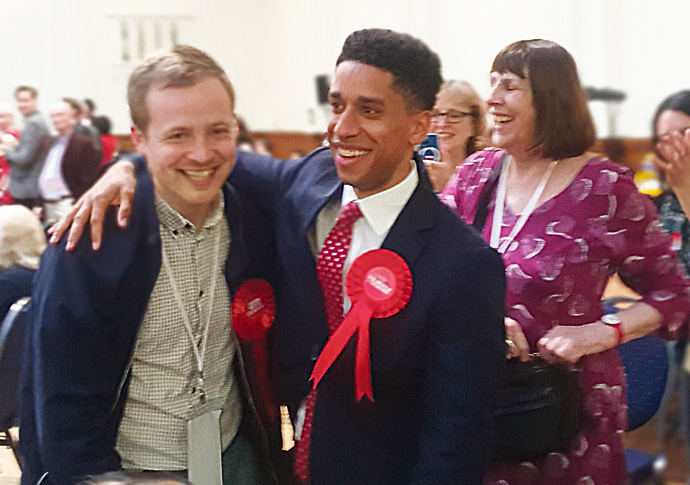
Will Labour enjoy the count as much as 2022?
Or will Labour capsize due to the government’s failure to show how people’s lives have meaningfully changed since returning to power in 2024?
Given the history of Westminster’s local politics, this might seem very likely, but have the Tories got the strength to reclaim lost ground?
With so many questions and not much in the way of on-the-ground polling – we are relying on anecdotal summaries of the response to canvassing sessions – a new website says it has crunched the numbers to predict what it thinks will happen on May 7.
Britain Votes Now, which says it is run by political campaigners who are also “technologists” and “data scientists”, has done a treatment for each ward. Their forecasts are based on local demographics and it’s claimed that, while individual quirks will exist in certain areas over localised issues, the “Law of Large Numbers” eventually kicks in to provide clues.
Harrington remains a little sceptical, especially when they write that “the same technology that can predict a woman is pregnant based on her shopping habits before she herself realises is what powers our analysis.”
Only 48 people have decided to follow along on X since it was created last month, but if you are ready to dive in, you’ll find them predicting Labour doing far better than the doom boys expect.
In lots of wards, Britain Votes Now suggests there will be a real mix of votes but Labour will crucially collect the most in many neighbourhood contests.
Take Hyde Park ward, for example, seen as a key battle in Labour’s storming of the city council four years ago.
These number mappers say that here Labour are still just about in the lead, likely with 28 per cent support, the Tories on 26 per cent, Reform on 19 per cent, the Greens on 15 per cent, and Liberal Democrats on 12 per cent. What a rainbow!
As Harrington said, take such claims with a large pinch of salt, but it’s not unthinkable that in many places in Westminster, Labour candidates will win because Reform and the Conservatives split the right wing. In fact, if either the left or right coalesced around one candidate, then victory would be easy.
For all the reasons set out above, we won’t risk looking like a donkey by calling Westminster City Council’s elections now.
This means we admire anybody willing to be bold enough to be out there confidently predicting ward-by-ward results, even if we live in a country where the same hoary political pundits you see on television get booked again and again no matter how many times they get it all wrong à la Brexit, Trump, Corbyn, Arsenal winning the league.
This could, however, be the election where councillors claim their seats with small-margin wins and a large majority of their residents voting for somebody else.
That wouldn’t be a great recipe for public satisfaction or a stable council – in fact, it would be a rather hollow success – but survival, right now, is the name of the game.
All we know for absolute certain is that journalists who show no interest in local government for four years will suddenly know everything about it.
They’re all experts in every authority once the prime minister’s future is on the line.
