Hope, hype, and benefits of technology
‘Brain chips’ are fitted into seven people at University College Hospital
Tuesday, 24th February — By Tom Foot
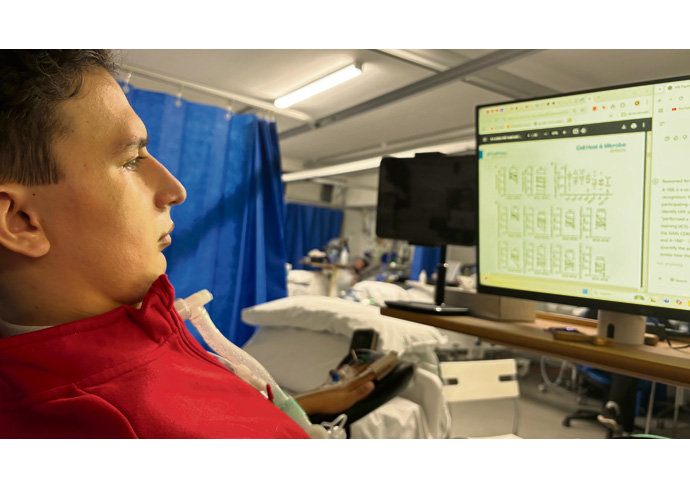
Sebastian Gomez has had hundreds of electrodes fitted into his brain tissue
AN Elon Musk-owned company’s “brain chips” have been fitted into seven people at University College Hospital as part of a pioneering study that has won rave reviews and sci-fi-inspired headlines from the mainstream media.
The Neuralink trials at University College Hospital are aiming to help people with severe neurological conditions use their mobile phones and computers again, using brain power alone.
One of those taking part in a UCH trial is a former medical student, Sebastian Gomez, who became paralysed from the waist down after a swimming accident.
A robot surgeon fitted hundreds of electrodes into his brain tissue that allow him to make commands to a digital screen with his thoughts. He has been filmed playing a game of computer chess using his mind to decide where the pieces move this week.
Sebastian said: “It is a massive change in your life when suddenly you can no longer move any of your limbs and this kind of technology gives you a new piece of hope. Now I can think of moving my hands to the right, to the left, and the technology understands what I want it to do. And it does it.”
But critics are questioning whether we can believe the hype, and wondering if the media frenzy is missing the point. More overblown promises from the publicity-friendly tech billionaire?

Mr Harith Akram
Neuroscientist Dr Dean Burnett, an expert in the field and author of several books on brain-interface technology, said: “First and foremost, it’s obviously a good thing that paralysed and immobilised people are getting some degree of function and independence restored. While I’ve no doubt the patients receiving the advanced devices are benefiting greatly from them, I have concerns that they too have been receiving an overly-hyped idea of what they’ve been given.
“Or at least it’s being spun that way in the reporting.
“There were similar reports about the amazing capabilities granted to the original participants in these trials, and much fanfare, but other reports, much later, revealed that the devices tended to lose functionality (often because electrodes detached from the cortex over time), so the paralysed person lost their newly-gifted abilities.
“The initial coverage of Neuralink invariably focused on the commercial applications, the average person could get one and control their smartphone with just their mind.
“As I kept saying at the time, for brain-chip technology to be commercially viable it would require many millions of people to volunteer for actual brain surgery and an army of neurosurgeons and accompanying professionals, to provide it.
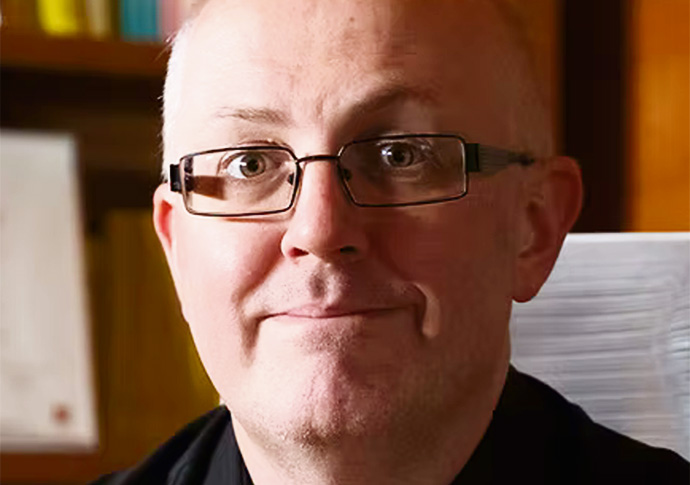
Dr Dean Burnett [www.deanburnett.com]
“All this medical care would have to cost less than the price of a brain chip itself, which would have to be cheap enough to appeal to the average user, otherwise it’s commercially unviable.
“The fact that this latest story states Neuralink’s brain-computer interface (BCI) technology ‘aims to improve independence for people who are paralysed’ is telling.
“That was never described as the ultimate aim before.
“It suggests a subtle scaling back of ambitions, in the face of logic and reality. But it would be so much better if people could just be honest about this, rather than let billionaire technocrats adjust reality in real time.”
The “N1” implant being tested in the UCH trial works by recording brain signals through hundreds of electrodes that are precisely placed within the patient’s brain by a purpose-built “R1 Robot”.
The chief investigator for the study Mr Harith Akram, a National Hospital for Neurology and Neurosurgery (UCLH) consultant, said: “For many people living with severe paralysis, this technology could offer something that has long been out of reach, a renewed sense of independence, agency, and connection with the world around them.
“To witness patients beginning to communicate, interact, and reclaim aspects of daily life through computers is deeply moving and a powerful reminder of why this work matters.”
