‘I like to boast that the reason the area has risen is that me and my wife moved in – that’s a joke of course’
Hunter Davies looks back at how Dartmouth Park has changed in the 64 years since he bought his first house there
Friday, 29th May — By Hunter Davies
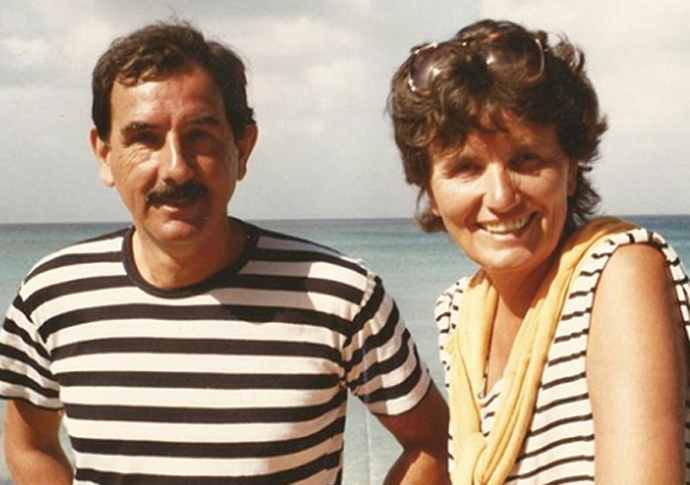
Hunter and his wife Margaret Forster said they would move back to Hampstead if they ever made any money. . . but they stayed put
GOODNESS, the changes I have seen in 64 years in Dartmouth Park, the local events I have witnessed, the people now gone, the people now left, and those bloody foxes, they have taken over. It was bad enough estate agents moving in, but at least estate agents don’t go through your bins. That would muck up their posh dark suits.
We bought our house in 1962 and I still have the estate agent’s handout, from Jennings and Samson in Fortess Road. Just one scruffy , duplicated sheet of A4, no pics, least of all colour, or flowery prose, not like today .
They were selling 10 properties, squeezed into one page.
They don’t give the actual street names, or house numbers, you had to ring up or go in and ask the address. Not exactly hard sell.
We were living at the time in a stunning little flat in the Vale of Health in Hampstead, right in the middle of the Heath, such bliss. The rent was six guineas a week. We had been living there for two years, since we got married in 1960.
We would like to have stayed in Hampstead, but could not afford the house prices, which were £7,500 in Flask Walk. We told ourselves if we ever made any money, we would be back. When we could, we never did too happy and settled here in NW5.
We had chosen to look the other side of the Heath, which was considered down market at the time. We told people we were slumming, a joke of course, as we both grew up in council houses in Carlisle and neither of our parents had ever owned a house.
It was not called Dartmouth Park in those days. It was Parliament Hill Fields, a name which lingers on in the 88 bus terminus. Old ladies in our street always referred to it as the Fields when they were going for a walk – never to the Heath. Some aspiring middle classes preferred to say they lived in South Highgate.
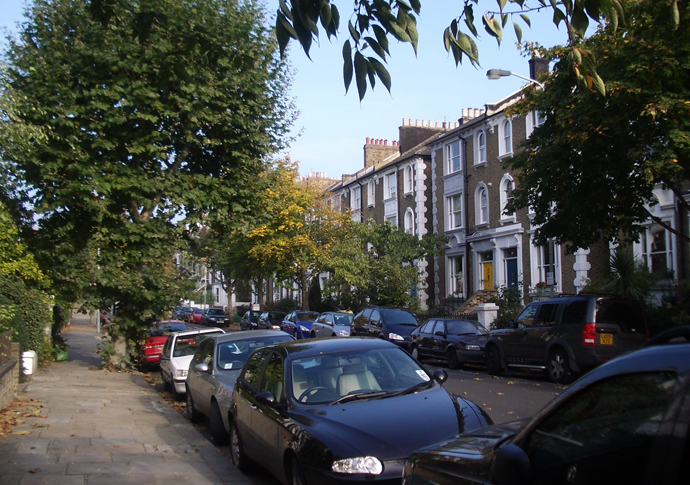
My memory is that it was a local estate agent, Benham and Reeves, known as Benham and Thieves, who started calling our little patch of eight to 10 streets Dartmouth Park. And it has stuck.
[Justinc_CC BY-SA 2.0]
The advert for our house stated that it had a sitting tenant on the top floor, paying the enormous sum of 32/6 a week (about £1.62 in decimal).
She had the whole top floor so when we went on to have three children, she had pro rata more space in our house than we had. And shared our lavatory.
She was a single elderly Irish woman, very forthright. She never revealed much about her early life, but many years later, an American writing a book contacted me to say she had been an IRA spy, planted in London. Which I still don’t believe.
I offered her money to move, but she refused. In the end, after 10 years or so, she agreed to go, if I bought a flat for her to live in, at the same rent.
I found a new block going up at the top of Chetwynd Road, but she said huh, not living there, it’s NW5. I want to be in NW3 or N6. In the end I bought a flat for her in a new build in Swains Lane, which was N6. Just.
Every house in our street, and the surroundings streets, back in the 1960s and 1970s, were multi-occupied. Everyone we knew had a sitting tenant. Now, 64 years later, I would say almost every house is occupied by only one family, with children called Daisy and Sam, and a dog called Rex. The dad is a lawyer, accountant or works in the City, publishing, TV or the media.
When we moved in, it was a working-class area, mainly elderly, with blokes who had worked on the railways, considered a very good job in those day, if you rose to be an engine driver.
Gradually, when they died, young professionals moved in, with children.
Today, when new people move into our street I boast that I am the oldest resident, would you like to know how much I paid in 1962? They say no, definitely not. So I tell them anyway.
The asking price was £5,500 but I got them down to £5k because of the poor conditions. In just under two years, Margaret and I had managed to save, from scratch, £1,500 for the deposit. Young couples today would have to save for a life time to manage a third of any London house.
My wife was a supply teacher, but trying to write a novel. I was a reporter on the Sunday Times. Today, I can hardly bare to mention how much houses go for in our streets. Look it up yourself. And prepare to be sick.
All our kids went to local schools, Brookfield Primary, then Parly or Ellis. I remember in the 1970s campaigning for comprehensives, speaking at meetings along with Fay Weldon. At one of them Tony Benn turned up to address us, and would not stop talking.
I became chairman of the governors of Brookfield and made one awful mistake when I took over. There had been divisions in the school so I was trying to bring people together. At my first meeting I took two bottles of champagne. And was accused of being a flash git. Still dunno why I did it. I think I thought it was funny, champagne at an ordinary state primary. Gospel Oak was the posh one in those days.
I remember a great street party in Dartmouth Park Road for the Queen’s Silver Jubilee in 1977. The tradition of street parties in our area has continued today, with the annual and amazing York Rise party.
The houses are now in better condition, compared with 1962, well painted, good nick, though of course there is never a year without scaffolding and skips in each street.
I love walking down Laurier Road and Dartmouth Park Road in winter, admiring all the Victorian stained-glass front doors and staring into the front rooms.
These days, unlike the 1960s with net curtains, people leave their sitting room curtains open as late as possible, the better for passers-by to admire their paintings and overflowing book shelves. I walk round to scoff, but I love it.
I like to boast that the reason the area has risen in 64 years is that me and my wife moved in, raising the tone. That’s a joke of course. It’s the economy what’s done it.
The longest resident of our street, after me, is our tortoise, who must be at least 60 years old. I bought him in the pet shop in Parkway. We have never fed him or watered him, taken him to the vet, or put him to bed. He just sleeps somewhere in the garden.
Oh if only children were like that.
But we do wash him and oil him when he wakes up each spring, just to amuse the children. My wife uses Waitrose extra virgin. I use Tesco cooking oil.
I expect he will outlive me now, as he is ever so fit, if slow. Then so am I.
I love my house and my street. My heart lights up when I come home. It feels such a happy, friendly, sociable, unstuffy street with families I have known for decades and seen all their children growing up.
When ours were young, we had childrens parties each Xmas, with a local quiz and making them all do a turn, singing or playing an instrument,or telling jokes.
I can hear them still, when I am at home on my own. Alone with my memories and of course the tortoise.
I am staying here, till the end. Next month I am moving my bedroom downstairs, as I fear I won’t manage the stairs any more. I will sleep so I can look straight out into the garden. Admire all the huge trees in my neighbours gardens. Shouting at the foxes shitting, but talking to the tortoise…
• Hunter Davies’s next book – Get Back: The boys who became The Beatles – is published by Ebury Spotlight in September
