Murky role of UK and US in bringing down Iranian progressive is laid bare in Coup 53
Film is a visual history lesson as to why Iran is being bombed today
Thursday, 20th August — By Dan Carrier
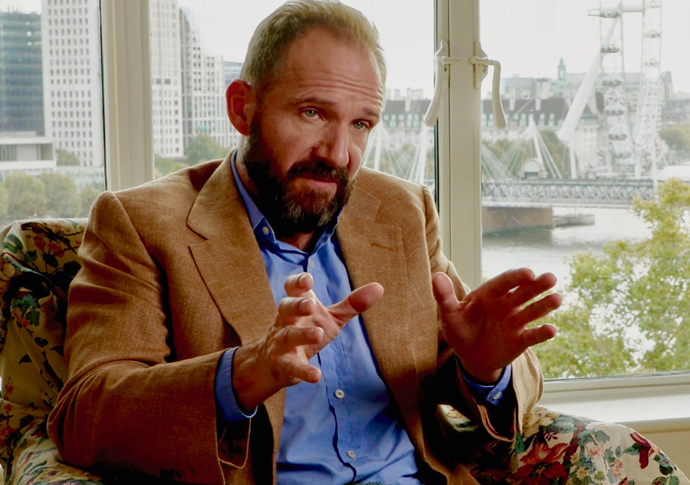
Ralph Fiennes in Coup 53 [Chris Morphet]
COUP 53
Directed by Taghi Amirani
Certificate: PG
☆☆☆☆
IN April 1951, the soft left politician Mohammad Mosaddegh won an election in Iran.
An author and lawyer, he came from a prominent family and used his privilege with care: he was appointed a tax collector in the province of Khorasan – a role that one suspects would immediately make you a fairly unpopular character. Not so Mosaddegh: he was known for being scrupulously fair.
He entered politics, bringing a learned approach to the problems of his nation in a post-war and still colonial world. He introduced land reforms, brought in a welfare state, attacked corruption and created a fairer tax system.
A progressive, democratically elected man who cared for those he represented and was not afraid of standing up to vested Capitalist interests… perhaps it is no wonder that the nefarious British government felt this Persian democracy was a threat.
Coup 53, a film by British Iranian film maker Taghi Amirani, tells Mosaddegh’s story – and then reveals how the British and American secret services brought him down and installed a Shah-led regime that lasted until the 1979 revolution.
It is a well known fact that the 1953 military coup was led by shady British MI6 operatives. Mosaddegh’s crime was nationalising the country’s oil. How it came about is laid bare here.
The film is a slow burner. After learning the director’s back story, we are treated to him trawling through reams of documents. Contained within is the evidence that MI6 and the CIA were behind the coup.
The film is a visual history lesson as to why the USA is bombing Iran today. It creates a thread from the nefarious behaviour of a United Kingdom in the immediate post-war period, struggling to understand that the Victorian era of colonial exploitation had to come to an end. We are treated to news footage shot at the time as British oil technicians are airlifted out of the country.
Ralph Fiennes is drafted in to sparkle some starriness on the proceedings, as he reads the draft of an interview of the MI6 agent who was a key cog in the coup.
There is a lot of information to swallow in this potted history of Western misdemeanors, much gleaned from the rushes of a documentary called End Of Empire, which saw the protagonists of the coup go on camera to describe their work.
Amirani pulls all these threads together to create a comprehensive picture of what happened, but it doesn’t come over as a Pentagon Papers / Daniel Ellsberg moment – it’s more a comprehensive recap, putting all the evidence already out there in one place.
