Ripping yarn: revisiting the harrowing ‘Camden Town murders’
Lottie Moggach tells Dan Carrier how unearthing an obscure Victorian crime inspired her new novel
Thursday, 5th February — By Dan Carrier
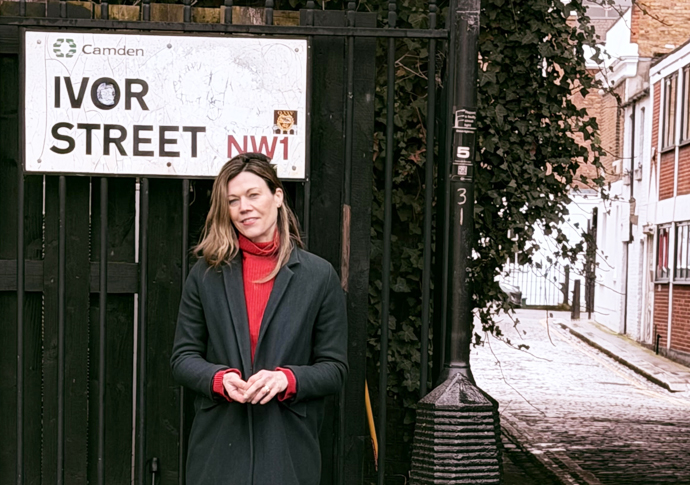
Lottie Moggach at the scene of the crime
THE murders of Phoebe and Tiggy Hogg were a distressing tragedy that captured the attention of our Victorian forebears. Phoebe was found on a rubbish dump in Hampstead, her skull smashed and her head nearly severed from her neck. Her 18-month-old child was found smothered in Finchley.
At first, there were rumours this was the work of Jack the Ripper, but it would quickly emerge that this awful, harrowing crime was committed by Mary Pearcey, the lover of Phoebe’s husband, Frank.
She had been spotted pushing a pram through darkened Camden streets – and the same pram was found covered in the victim’s blood.
She had killed the pair in her home in Ivor Street – then named Priory Street – and used the pram, which today can be found at Madame Tussaud’s Chamber of Horrors, to dump the bodies.
Mary was sentenced to death just weeks after being arrested and convicted.
Now a new novel from writer Lottie Moggach revisits this harrowing crime, which became known as the Camden Town murders and commandeered reams of newsprint: the retelling of the story sheds light on the victims and the perpetrator – and comes from a personal link the author has to scene of the crime.
“In the early 80s, my granny, Charlotte Hough, moved from St John’s Wood to a three-storey terrace on Ivor Street,” she says. “Soon after moving in, she started to have odd experiences – when in the kitchen, she thought she saw blood splatters on the wall out of the corner of her eyes and heard the cries of a baby, even though her neighbours didn’t have small children.”
Lottie’s gran discovered her home’s shocking secret via a well-known broadcast journalist, who was writing about the crime.
“One day there was a knock at the door, and she opened it to find a tall, dashing bald man who was a famous face at the time – Gordon Honeycombe, a newsreader and TV presenter.”
Gordon worked around the corner at TV-AM in Hawley Crescent.
“Honeycombe had a sideline writing books, and was researching one about notorious historical crimes,” adds Lottie.
“He asked granny how she felt about living in a murder house.
“It was the first she knew about it. He told her the story of Mrs Pearcey, who had lived there in 1890, and killed her victims in the kitchen.
“After hearing this, she had the house exorcised by a vicar and the weird occurrences stopped.”
Lottie tells the story of the murders and their aftermath through the character of Hannah, a young woman who lives in nearby Camden Square. She sets out to investigate the case, with the hope of helping her newspaper reporter fiancé Cosmo. Her journey takes the reader to the crime scene and immerses herself in the Victorian world of sensational, Penny Dreadful-style reportage, shining a light on the mores and wants of a society going through the tensions of change.
The idea for the novel came about during a nostalgic walk around Camden Town.
“I was walking around my old stomping ground – I moved to Crouch End in 2019 – and went down Ivor Street. I thought of Mary.
“I didn’t want to write from her point of view, or about the murders themselves – that would be too prurient and grim – but rather about what the crime might say about the lot of women in that last decade of the 19th century, when huge change was on the horizon but not yet filtered down to the woman on the street.”
This led to the character of Hannah as a vehicle.
“Hannah is the same age and lives nearby, but is middle-class not working-class like Mary, is engaged and seems destined to follow the path expected of her, until she comes across this story, and her engagement with it makes her reconsider ideas about love, marriage and work.”
The book brings to life the streets of Camden Town – giving Lottie the excuse to delve into the archives to re-create the world of our great-grandparents.
“It was amazingly fun researching 1890s Camden, as I know the area so well – and lived in some of the places featured,” she reflects.
“It is a fascinating area because it was so socially mixed – looking at Booth’s poverty map of 1889, it went from one end of the scale to another in just a couple of streets, and it is still the same today. Pockets of the area remain redolent of that time. Not just the repurposed piano and false teeth factories, but atmospheric details – for example, cobbles on Prowse Place, grimy lace curtains in the top windows of Victorian terraces.”
Creating an honest picture of Mary led Lottie to newspaper archives.
“Mary Pearcey occupied a slightly vague place in society – upper working-class, slightly educated and trappings of respectability,” observes Lottie.
But her relationship with a carpenter, John Pearcey, with whom she lived, was not all it seemed.
“She was a ‘kept’ woman – as they called unmarried women who lived with men. They were seen as essentially prostitutes, so she took his name and pretended they were married, a common practice.
“Accounts of her past come from partial and sometimes muddled newspaper interviews with her mother, but what seemed to be true was that she had a troubled background, was mentally ill – ‘epilepsy’ was a catch-all term back then – yet could also be kind. She seems to be religious, despite ‘living in sin’. Newspaper depictions of her varied, and projected various Victorian stereotypes onto her silent appearances in court. For some, she was a cold mannish monster, others saw her as a delicate victim and assumed Frank Hogg was involved in the crimes – a woman couldn’t possibly do such horrific acts by herself.
“It was discovered that she was a fan of trashy romance stories, so the murders were framed as a sort of crime of passion, a twisted version of the denouement of these stories, when there is invariably an altercation in a parlour with a love rival, lots of flashing eyes and threats.
“When she was found guilty, the tone changed and focused on her ‘epilepsy’. There was much public support to have her death sentence overturned – it was very rare that women were executed. Death sentences were usually commuted.”
How her trial unfolded also casts a light on the harsh process Mary faced.
“The criminal justice system back then was very scary, because of lack of forensics, far too much weight given to a defendant’s ‘character’ and impression they made,” adds Lottie.
“A defendant wasn’t allowed to give evidence in their own defence. This was to change in 1898 with the Criminal Evidence Act. Mrs Pearcey’s lawyer’s case, as it was, rested on the fact that Frank Hogg must have been involved – basically because he looked like a wrong ’un and Mrs Pearcey was ‘kind’.
“But in court, just before the jury was sent out, the judge instructed them that even if they did think he was involved, he wasn’t on trial, and if they thought that Mrs Pearcey had been in any way involved in the crimes – which she clearly had been because of being seen with the pram – they had to find her guilty.
“Her lawyer had made a monumental mistake in his approach, but there was no redress, no appeals, and death sentences were quickly carried out. The crime was committed on October 24, the trial started early December and she was hanged just before Christmas.”
Today, the Pearcey murders are known to those who are into true crime yarns – but the case has largely been forgotten.
“I was surprised that it had been such a huge news story back then and yet she isn’t that much known about,” adds Lottie. “She was an enigmatic figure who barely spoke and when she did it was bullshit – she was mentally ill,” adds Lottie.
“The story is tragic and horrific for all involved. Once the horror of her crimes started to recede, so did she.”
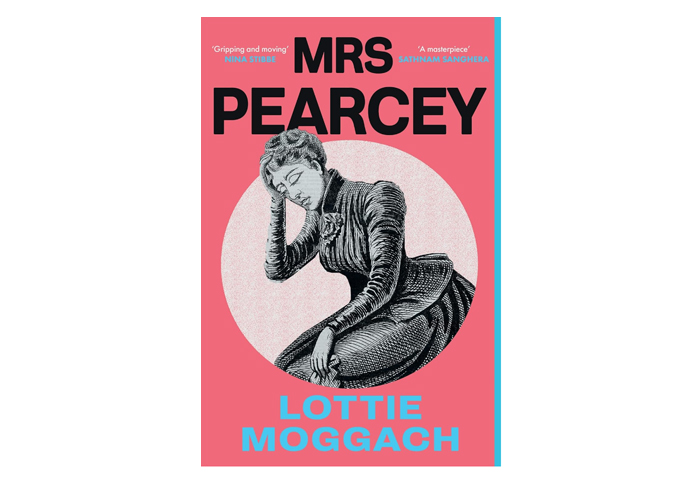
• Mrs Pearcey. By Lottie Moggach, Phoenix, £20
• Lottie Moggach launches Mrs Pearcey at the Owl Booskhop, Kentish Town Road, tonight (Thursday) at 7pm
