The French revelation: ‘It is the real turning point in London’s global success'
How did the turmoil across the Channel in 1789 impact the streets of the capital in this country? Dan Carrier goes in search of answers by talking to London historian Jerry White
Thursday, 15th October — By Dan Carrier
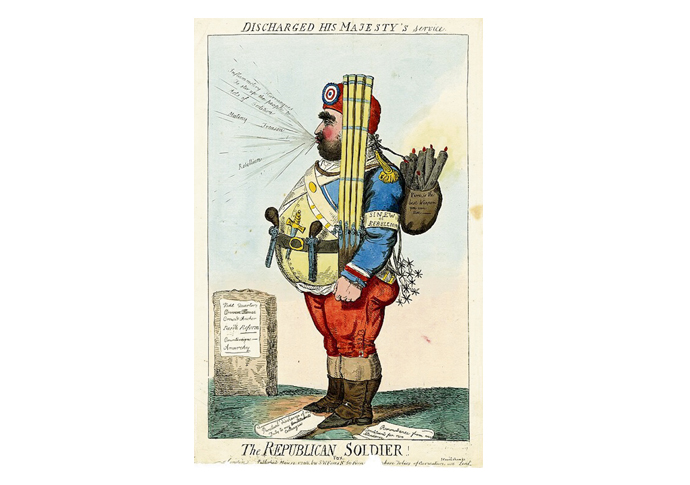
Whig politician Charles James Fox caricatured as a French-style revolutionary soldier for his sympathies towards the French Revolution. The title ‘Discharged His Majesty’s Service’ mocks his diminished role after he was removed from the Privy Council for a toast praising ‘our Sovereign – the Majesty of the People’
IT was “the best of times, it was the worst of times”, as Charles Dickens wrote at the beginning of his novel A Tale of Two Cities.
His story was set amid the upheavals of the French Revolution, and dashes to and fro across the Channel as the plot unfolds.
Historian Jerry White’s latest work, Birth of a Global City: London in a Revolutionary World, considers the impact the founding of a Republic in France had on London – and reveals how Dickens’ opening sentence rings true.
Jerry is a renowned chronicler of London’s past. His previous works have ranged from telling the story of an East End tenement building to the tale of a notorious Islington road, Campbell Bunk. He has charted how London faced the Great War, and then the Second World War.
Now he goes back to 1789 and considers how world-shaking events on Parisian streets ushered in a new age in London, too.
“There were 25 years spanning from the opening of the 19th century that were vitally important in London’s story,” he tells Review. “It is the real turning point in London’s global success and happened in this fairly short period – 1789 to 1815.”
Politically, two camps formed from democrats and monarchists, their contrasting beliefs put in print by Tom Paine and Edmund Burke. For the reactionary Burke, the fear of a London mob copying the French people were real and extensive.
Politically, Jerry tells the story of how Londoners reacted: “I was interested in the politics of the street,” he says. “There were these debates between democrats and the reactionaries – illustrated by the works of Tom Paine and Edmund Burke. How did this play out on the streets?”
The founding of the London Corresponding Society by a shoemaker, Thomas Hardy, was crucial. He believed the American Revolution was about the “future happiness of the whole human race”.
“Single-handedly by his own account, Hardy drew up a plan for the LCS as a ‘means of informing the people of the violence that had been committed on their most sacred rights, and of uniting them in an endeavour to recover those rights’. This was the first working man’s organisation campaign for parliamentary reform,” says Jerry.
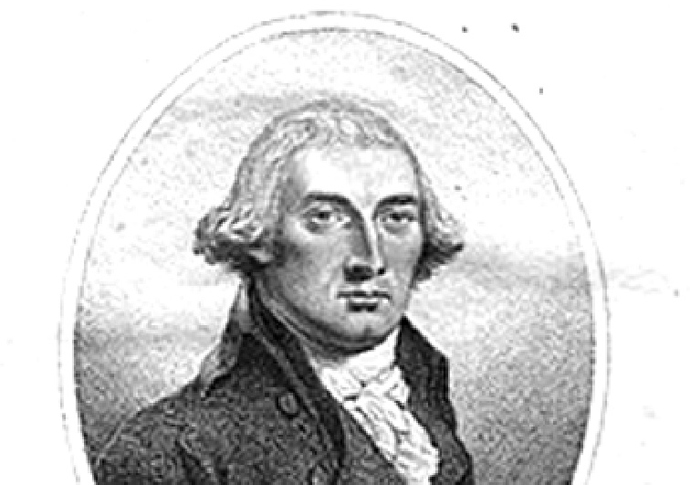
Political reformer Thomas Hardy
The upper classes quaked in their boots when they learned of the violence meted out by furious Parisians. “When the Bastille fell, it was in the shadow of the Gordon Riots nine years before,” says Jerry. “This caused £100,000s of damage and hung over the government. They were afraid of ordinary Londoners.
“The French Revolution brought that fear to the forefront of their thinking. The important distinction was the London crowd were not bloodthirsty – but the aristocracy did not know that. The fear of revolution stalked the streets. There were reports of pikes being forged in secret in Somers Town.”
Economically, London saw wealth flow that helped cement the 1800s as the age of Britannia – and also saw a war economy create winners and losers.
“The period saw the collapse of the French colonies in the Caribbean and India and the expansion of the British empire in its place, and the rise of London as a global trading centre in terms of commodities such as sugar and coffee,” adds Jerry. “The French aristocracy and European bankers came to London – and it was these bankers who were able to fund the Napoleonic wars.”
It would physically change the face of the capital, too.
“Trade and empire, the city and financial business all boomed – and money poured into London’s infrastructure,” he says. “By 1815, there had been a total revolution in the Port of London. There was the development of Wapping, the West and East Indian and Surrey docks. These were all new facilities and were vital in stimulating trade.” The docks eased congestion on the river and stopped the plundering of goods by thieves.
“There could be anything like 1,700 ships on the river at any one time and until the docks came there was a lack of security,” says Jerry. “It created the greatest port in the entire world, and it would remain that way until New York took it over in the First World War. The changes transformed London’s global reach as a trading port.”
And as trade came to London, so did banking. Jerry tells the story of Amsterdam bankers Hope and Co, who arrived in London in 1794, followed by Alexander Baring a year later.
“The flight to London of Hope followed a path established from the first days of the French Revolution,” writes Jerry.
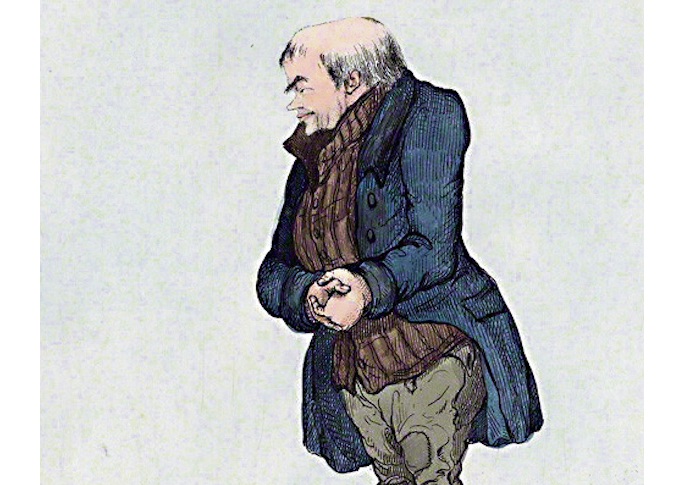
John Farquhar, a 1826 engraving by George Humphrey
“The disturbances in Paris drove many aristocrats and professionals to seek refuge across the Channel. The first wave came ashore as early as July and August 1789, aristocrats who were tarnished in the popular mind at home by their involvement in court and government and who scattered all over Europe. Amid rumours of bank failures in Paris, many brought money with them.”
New money helped fund canals, which changed the face of west London, with Paddington developed, and the extra wealth created the need for new housing to the north of the New Road – now Euston Road. This period saw the development of Camden, from Bloomsbury squares to the creeping of the metropolis northwards into what is now NW1.
Jerry’s wonderful storytelling and comprehensive research shows how crucial these years were in making modern London. On every page there are stories of those who walked the same streets as we do today: from the great, good and notorious through to the everyday Londoners, the book offers a viewpoint on our past.
French exiles added a sheen to the middle classes: “Ruined aristocrats were ill-equipped to earn a living but many of the middling sort could follow something like a profession or trade, even if not necessarily their own – we hear of chefs, shoemakers, teachers of French or music, writers for the French press, artists, needlewomen of one kind or another…”
And then there were the English investors who stepped in where French money men had previously been. Take the story of John Farquhar: born in Aberdeen in “humble circumstances”, he was an able student who “pursued wide-ranging intellectual interests for the rest of his life”. He signed up to work as an army cadet for the East India Company and settled in Bengal as a merchant. There he made his fortune making gunpowder.
He came back to London to live in Marylebone, and was worth nearly £1,00million in today’s money.
“His Upper Baker Street house was ill-kept and dirty, his room (to which a brush or broom had never been applied) strewn with books and papers,” describes Jerry.
“He was cantankerous and quick to take offence, though generous in his support of charities…”
Jerry tells us how Farquhar invested carefully and not only funded the building of Park Crescent, Regent’s Park, but took it on himself to join the builders as they worked.
With stories such as Farquhar’s, Jerry shows the links between the development of Regency London and the fall of the Bastille – joining dots that shaped the city we know today.
• Birth of a Global City. By Jerry White. The Bodley Head, £30
