‘We are carers for animals like nurses are for people’
Caitlin Maskell meets the monkeys and feeds the penguins as she hears all about a £20million animal hospital investment at London Zoo
Friday, 22nd May — By Caitlin Maskell
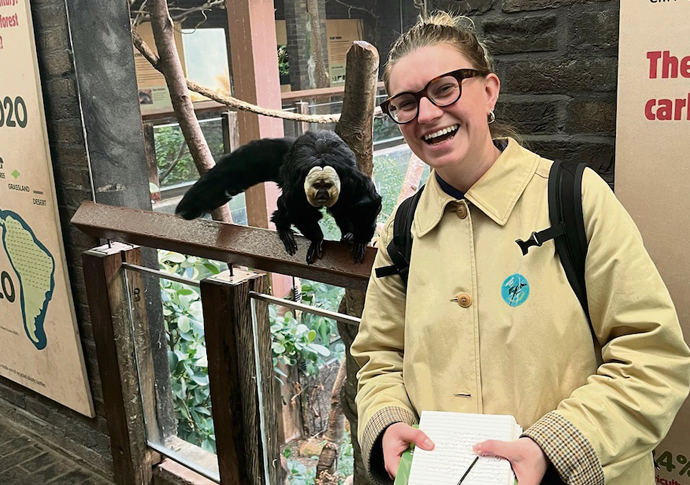
Extra reporter Caitlin Maskell meets some of the residents including a white-faced saki monkey
I CHANNELLED my inner David Attenborough this week on an insider tour of London Zoo.
From employing the world’s first zoo vet in 1829, to constructing Europe’s first purpose-built zoo veterinary hospital 70 years ago, it remains a place where visitors can get to see some incredible animals up close. But the zoo, which has been bringing people and wildlife together for two centuries, has also helped many species to be brought back from the edge of extinction.
The zoo’s animal manager, Dan Simmonds, told me: “What many people don’t know is that we work with over 70 countries to restore habitats and protect endangered species. We’ve reintroduced species back into the wild that had an extinction crisis.”
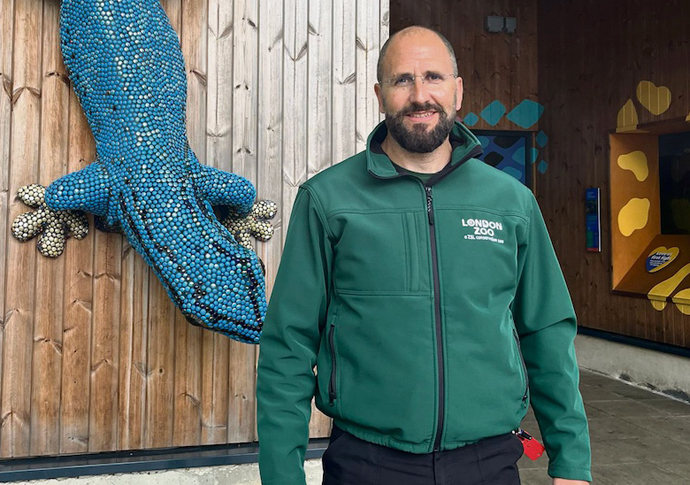
Animal manager Dan Simmonds
Mr Simmonds started out at the zoo 22 years ago, and for 17 years worked as a zookeeper caring for gorillas and big cats. But despite the joys of being around animals day to day, it’s not all fun and games.
As he handed me a rather smelly mug of dead fish to feed to the Humboldt penguins, he explained that one of his roles was to check on staff who can experience “compassion fatigue”, similar to key workers.
“Animal keepers are often emotionally drained from seeing animals decline or suffer ill health,” he said. “The emotional drain of looking after primates is quite significant,” he said.
“Generally, one common trait that we keep track of for all our keepers is compassion fatigue. When I was cutting my teeth in zookeeping, people would laugh about this idea and tell you to get on with it, but actually that is the same thing that nurses and doctors experience.
“We are primary carers for animals like nurses are for people.”
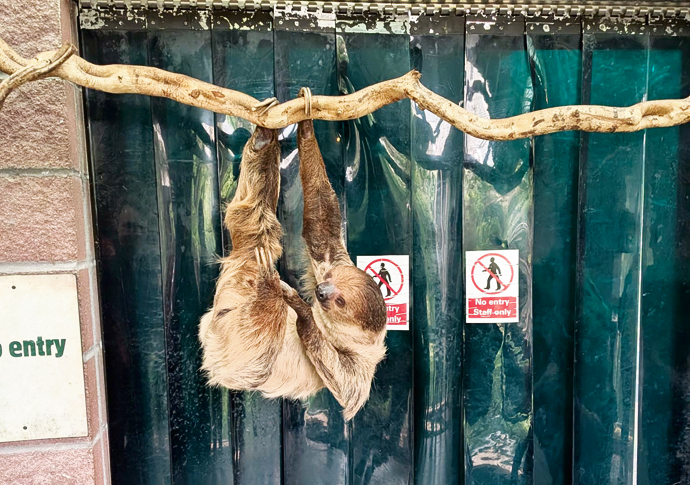
A sloth
I wonder whether keepers feel sadness at seeing such exotic animals living in enclosures rather than roaming free in the wild. He said: “We work with the space we are given. If we had leaps and bounds of space, that would be amazing, but we don’t. But we focus on conservation and education, rather than just exhibits. Most of the animals here are endangered, and in the wild we do work to protect those species through research.”
As we walked across the zoo’s 36 acres, passing an Asiatic lioness sleeping on warm stones, golden-headed tamarins playfully leaping with their new infants, and capybaras sheltering from the rain in their hut, it became clear that a £20million investment into a new onsite animal hospital could not have come at a better time.
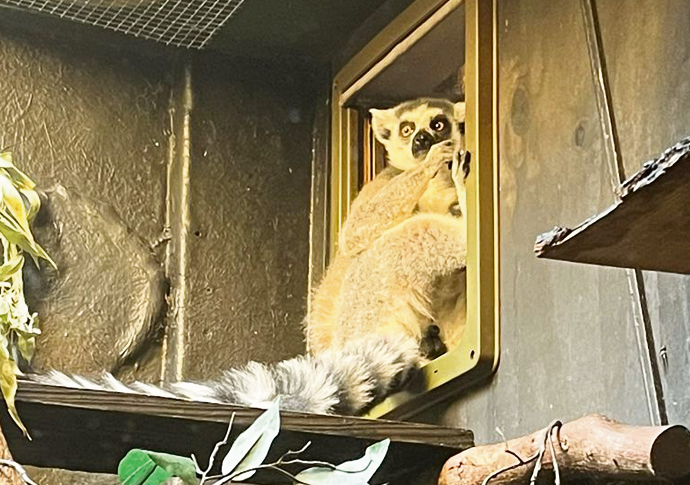
A lemur
Mr Simmonds said: “When I joined 22 years ago I joined a veterinary hospital which was built decades ago. That’s not been updated through lack of neglect, that’s because we just didn’t have the money. Money that has come in has been used to maintain an ageing building that we have grown out of.”
He told me the public will also be able to watch animal checks and post-mortems live from a viewing gallery, like something out of a scene in Jurassic Park.
“Its going to make a world-class team of vets matched with a world-class building,” said Mr Simmonds.
“We’re already recognised as a world-class leading zoo and conservation organisation but we now have the tool to lead even further.”
As our tour came to an end, I half expected Dan the animal man to throw me into a lions’ den, or surprise me with a snake draped around my shoulders. Neither happened, and the animals are rarely touched, unless they need to be sedated for check-ups – protecting an aspect of their wild nature.
