Fever stitch: 140 years of football history through Arsenal’s team jerseys
Lloyd Bickham visits a free pop-up exhibition in a pub
Friday, 29th May — By Lloyd Bickham
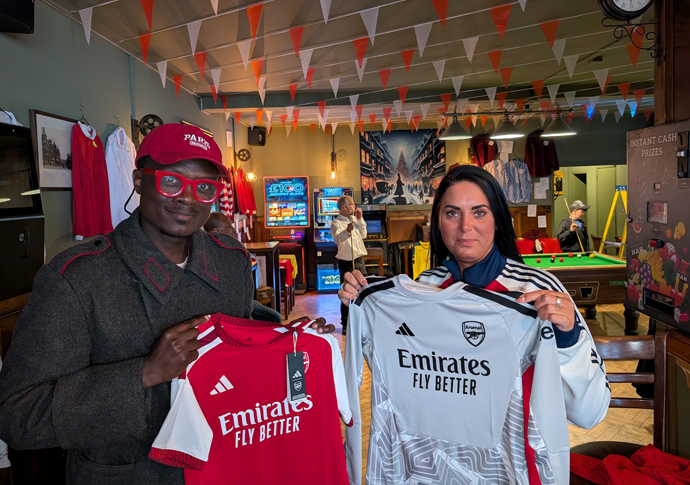
Exhibition curator Abdul Rashid Zakari with Cheryl Carr, manager of the Weaver Arms
AS fans peeled out of pubs and homes to descend on the Emirates Stadium at the weekend, they created a sea of red and white, with a smattering of yellow. It had all worked out in the end for the Premier League champions – and Abdul Rashid Zakari.
It’d been a nail-biting few weeks for Abdul, curator of the Arsenal jersey free exhibition which has taken over the Weavers Arms in Newington Green.
“I had agreed on a venue with the council, but at the last minute they had to cancel,” says Abdul. He took to the local Facebook groups for help, and received a flurry of offers.
“I was very lucky – there were so many supportive local businesses. The issue was that people didn’t really know the impact of what I was putting on,” he reflects, gesturing at the walls at the Weavers.
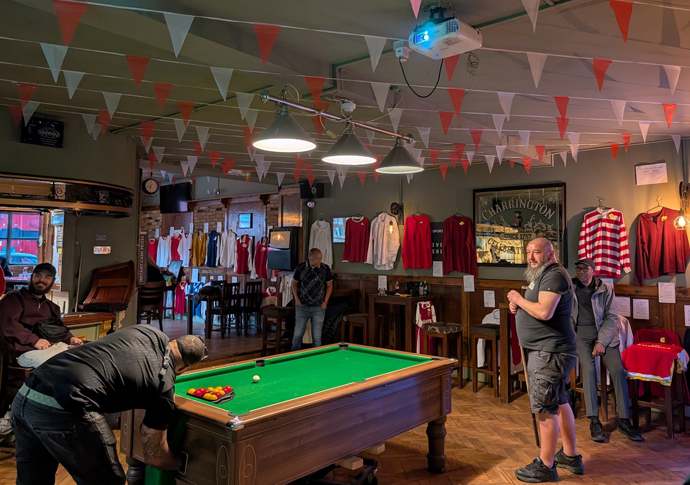
Arsenal shirts hanging on the walls of the Weavers Arms pub
They’re covered in jerseys, which wrap around the bar, to the pool table, under the alcove windows and even the space between the toilets.
These shirts document 140 years of footballing history, in which “Arsenal have always been pioneers,” claims Abdul. There are differing accounts as to how Arsenal ended up with their red shirts, but it’s undisputed that the team were the first to incorporate player numbers on the back of jerseys.
“A lot of Arsenal’s rich history comes from Herbert Chapman [club manager from 1925 to 1934], who was keen to expand the team’s reach. He worked with the BBC engineers at Alexandra Palace, and Arsenal played the first match to be broadcast on live radio. Later, the first live TV football match was also hosted at Highbury,” Abdul explains.
Visible player numbers helped radio pundits communicate action to listeners at home, while Chapman’s introduction of the iconic white sleeves added maximum visual impact on the pitch for television.
Abdul takes a group of us on a tour of the jerseys, peppered with anecdotes. “The white sleeves became very popular in the 30s, and this was before merchandise,” he says.
“One boy asked his mother, a seamstress, to make an Arsenal jersey for him. Because of the contrasting colours, every time she would wash the shirt, she had to detach the arms and collar, and then put it back together again once they’d been cleaned separately.”
And what of the yellow away kit?
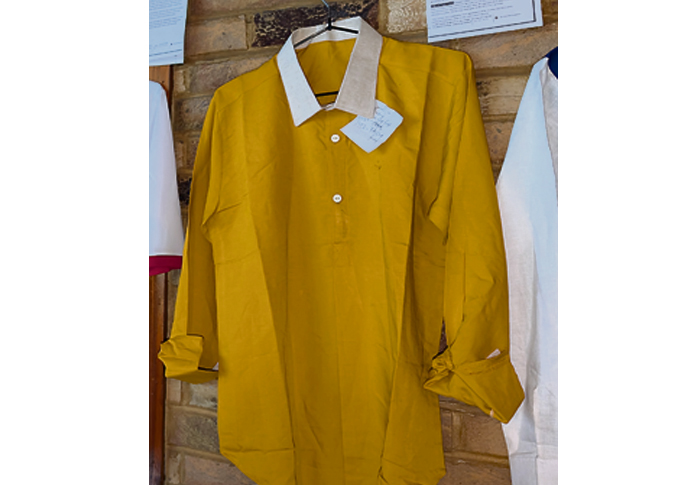
“That’s a story of chance and superstition,” he says. “Arsenal were in the 1950 FA Cup Final, against Liverpool. Of course, they both wore red and white, so one team had to switch colours for the match. Arsenal lost the coin toss and had to wear yellow, but won the trophy. That was that – yellow became a lucky colour.”
The 1950 jersey looks more like businesswear than sporting kit. No time to admire the dagger collar, as there’s a commotion and Abdul breaks his train of thought.
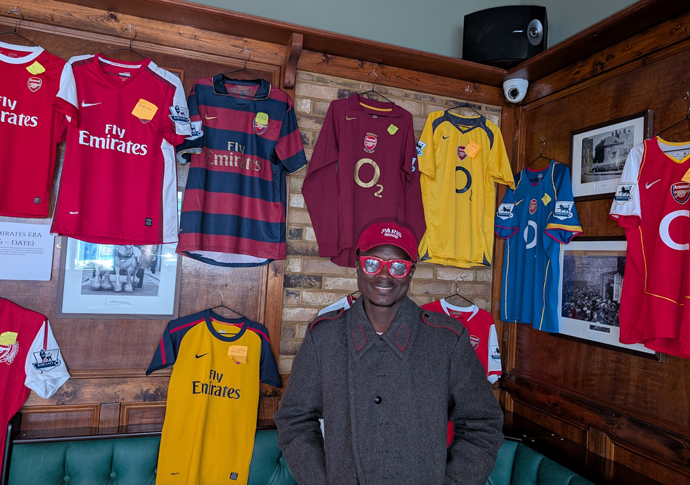
Abdul Rashid Zakari and some of the exhibits includling, below, the yellow away strip from the 1950 FA Cup Final against Liverpool
Pub manager Cheryl Carr has returned, brandishing two new jerseys – they’ve just released Arsenal’s 26/27 kit. She gives one to Abdul and they embrace, before Abdul points out the historic elements of this new design.
“It was a bit daunting,” says Cheryl. “I wanted to help out, and then, when Abdul arrived, there were just more and more shirts – it took him two and a half days to set up! I thought ‘oh no, what have I done?’ But when it came to my era, with the JVC jerseys being put up, I knew this was a wicked exhibition.”
Abdul has proven very popular with the regulars – even those who still support Spurs.
“More and more people are coming and can’t believe how educated he is,” smiles Cheryl. “He’s written books about football shirts, he’s on another level. Everyone has got such a respect for him.”
Abdul was born in Ghana, and was part of the Arsenal Supporters Club there from a very young age. “The team has been such an inspiration for me,” he says. “I’ve designed shirts for local teams in Ghana, and I want locals here to know the impact Arsenal’s jerseys have had around the world.”
As the sun beams down on the Emirates Stadium and Gooners prepare for Sunday’s parade, this pocket of north London does indeed feel like the centre of it all.
• From Woolwich to the Emirates Shirt pop-up exhibition is at Weavers Arms, 98 Newington Green Road, N1 4RG, until May 31. www.londonjerseygallery.com
