Two Bloomsberries: a romantic, domestic and creative partnership
John Evans on a new look ‘Inside Bloomsbury’
Thursday, 12th November — By John Evans
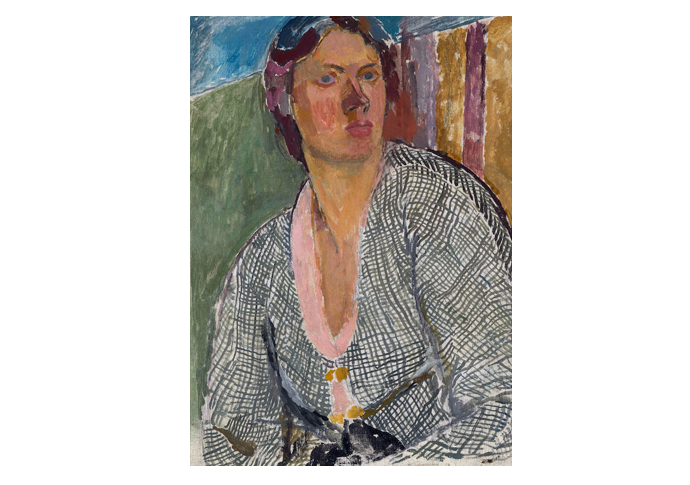
Vanessa Bell, Self-Portrait, c1915, Yale Center for British Art, Paul Mellon Fund B1982.16.2 [© 2026 Estate of Vanessa Bell. All rights reserved, DACS]
A SPIRIT of innovation together with a series of profound changes are explored in a new Tate Britain show*.
The protagonists are Duncan Grant (1885-1978) and Vanessa Bell (1879-1961) and through more than 300 artworks, letters and photographs, their unique collaboration – a romantic, domestic, and creative partnership – is traced across five decades.
This is billed as the first major exhibition to chart their artistic journey “from early post-impressionist and abstract paintings to late naturalistic self-portraits, landscapes and still lifes”.
Vanessa – Royal Academy and Slade-trained – spoke of her feeling of liberation, when their friend, the artist and critic Roger Fry put on the landmark Manet and the Post-Impressionist exhibition in London in 1910 and she and Duncan – who had studied at Westminster art school and in Paris – began to paint with simplified forms and heightened colours.
In his foreword to a show catalogue, Tate Britain’s director Alex Farquharson notes that they are both remembered as core members of the Bloomsbury Group and their work “reshaped British modernism in profoundly human and social terms”.
Between 1904 and 1907 Vanessa’s home at Gordon Square, was the primary meeting place for the group.
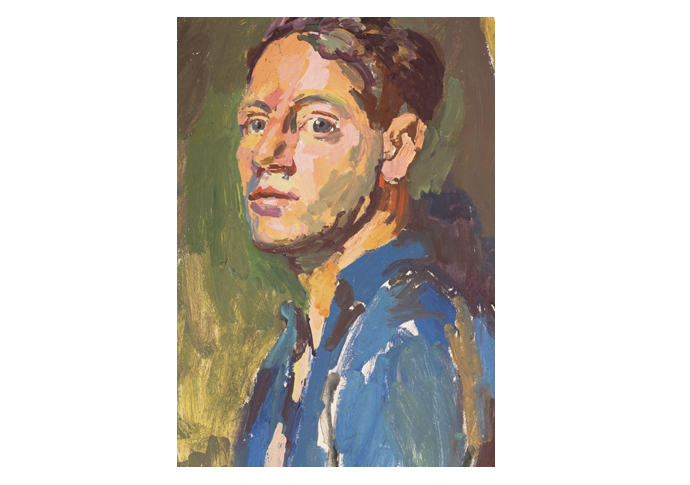
Duncan, Grant Self-Portrait [of Duncan Grant], c1920, detail, private collection [© 2026 Estate of Duncan Grant. All rights reserved, DACS]
Prominent members of the famed collective of writers, artists and intellectuals who feature in this show include Vanessa’s sister Virginia Woolf, Leonard Woolf, John Maynard Keynes, Fry, and Mary, “Molly” Lady MacCarthy, who had early dubbed these friends ”Bloomsberries”.
Duncan, a gay man, and Vanessa’s partnership was both fraught, fruitful, and complex and the show reflects this through the art and by examining their unconventional lives at Charleston House in East Sussex, and its importance to the Bloomsbury set.
Born Vanessa Stephen, her marriage to critic Clive Bell in 1907 was an open one. Charleston became Vanessa’s main residence in 1916, when she moved there with her and Clive’s two young sons; and Duncan. Though Vanessa and Clive never divorced, he would maintain a primary residence in London.
And as the Tate note, “Though their partnership was predominantly creative, Bell and Grant shared a home for over 50 years and a daughter, Angelica.
Themes in the exhibition range from self-portraits and development of these over time; the inspiration of post-impressionism ideas; a section on the Fitzroy Square-based Omega Workshops design collective of 1913-1919; various commissions undertaken, including 50 hand-painted Wedgwood dinner plates (1932-1934) depicting “famous women”; and a variety of later scenes from their travels, Granada, St Tropez, Paris, and more.
There is, too, a small selection of Duncan’s explicit and erotic drawings of male nudes, rarely seen and shown here as an “insight” into his life as a gay man.
Keynes was among his lovers and his portrait from 1908 is displayed. Vanessa’s portraits of her husband and of Virginia in 1912 are particularly striking examples of her portrait works.
In the final gallery there is a recreation of the artists’ studio from Charleston, restaged at the Tate while conservation work is undertaken at the East Sussex house, now museum.
*Vanessa Bell & Duncan Grant: Inside Bloomsbury is at Tate Britain, Millbank, SW1P 4RG to April 11. Tickets: tate.org.uk and 020 7887 8888.
