Baroness Helena Kennedy: ‘No wonder people think the law is there to protect the powerful'
The murder of Jamal Khashoggi illustrates the dangerous world we live in today, leading human rights barrister tells the Hay Festival
Thursday, 4th June — By Dan Carrier
IT was around lunchtime on October 2, 2018, when journalist Jamal Khashoggi entered the Saudi Arabian consulate in Istanbul, Turkey. He walked through the doors with a rather romantic aim – to collect paper work that would allow him to marry his girlfriend.
But Khashoggi was never seen again – murdered by a Saudi hit squad, on the orders of Mohammed bin Salman, the crown prince of Saudi Arabia.
For leading human rights barrister Baroness Helena Kennedy KC, the murder illustrates the dangerous world we live in today – the breakdown of international law, and the belief that if you are rich enough and powerful enough, you can commit heinous crimes and get away with it.
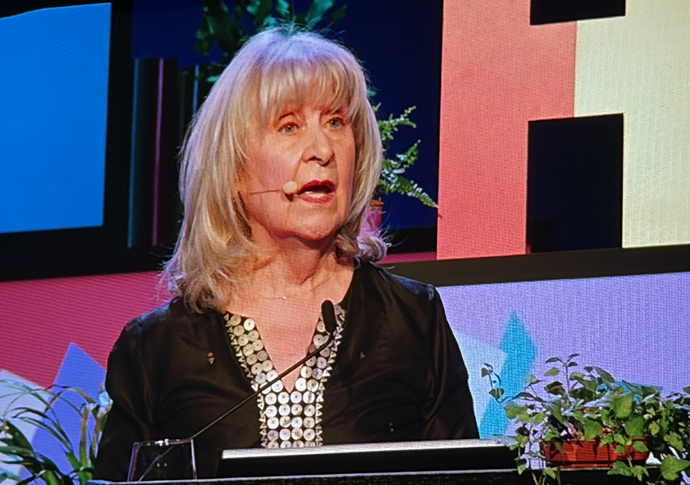
Speaking at this year’s Hay Festival, the Belsize Park-based lawyer’s lecture was entitled Impunity: How the Powerful Escape Justice.
“I had gone to Turkey to look at extra-judicial killings,” she reflects.
Khashoggi, who split his time in exile between the UK, USA and Turkey, was considered a threat by the Saudi regime.
“He wrote of reform across the Middle East,” said Kennedy, who described frightening evidence recorded by Turkish spooks, who had bugged the consulate.
“Two private planes flew in, with a Swat team and a pathologist skilled in post mortem dismemberment, and then a man who bore a resemblance to Khashoggi,” she said.
“The surgeon’s bag went through the scanners and in it was a saw. I felt sick – genuine nausea.
“Recordings played to us of conversations in the consulate general’s office included the pathologist asking when the arrival will be of the ‘sacrificial lamb.’ This was a premeditated murder. Khashoggi knew he was a marked man, but little did he know what waited for him inside.
“Kashoggi’s voice is at first up beat… then begins to express concern. He objects to being manhandled. He is asked why he has not returned to Saudi and you can hear him saying he will. He becomes more agitated and the voices become higher. You can hear him say no, no and you can hear him begging them to stop, saying he can’t breath.
“You hear strange voices and scuffles and there is a discussion about removing his head.
“Then you hear the shocking sound of a saw. A point came where we just sat in silence – we had born witness to a murder.”
The Khashoggi double left the consulate via a back door wearing the murdered journalist’s jacket, and the Saudis stopped anyone entering the consulate for 13 days. They then made a series of claims to deflect blame.
“The Saudis made total denials but when presented with evidence they said Khashoggi had started a fight, and then they claimed it was a rogue operation by Arabs who did not like his approach to Saudi Arabia,” said Kennedy.
“I believe his body was probably dumped outside Istanbul and his head taken back to Saudi Arabia.”
She explained how 18 people were implicated and after international pressure, 11 stood trial.
“All the perpetrators were set free in short order,” she said.
“At this time Turkey was having some serious economic difficulties and Mohammed Bin Salman was being lauded at Davos. It sent a message that strategic and economic interests matter more than justice. The law just does not apply to certain groups of people and the sad reality is this impunity has spilled over to our liberal western democracies.”
This is just one example, said Kennedy, of a slew of worrying setbacks to international law.
“At the end of 1999, I gave a lecture with the idea that the 21st century would be the century of human rights – and I was so wrong,” she told the audience. “I looked at events at the turn of the century and I saw General Augustus Pinochet in UK courts. I was celebrating the fact the international criminal court had just been created.”
She said the post-Second World War settlement brought gains for the concept of international law.
“This rule-based order is vital for peace and justice,” she said.
“Today we have seen the carnage in Ukraine and in Gaza, going against the Universal Declaration of Human Rights, which laid down this moral framework for international law. We are seeing people acting with impunity.”
And Baroness Kennedy cited the violence meted out by Russia – and long before the war crimes in Ukraine.
“My friend Anna Politkovskaya was an investigative journalist and she had been warning the world about Putin,” she said. “I tried to persuade her to seek asylum in the UK. She felt she had to go back to Moscow, she had two teenage children. I opened my newspaper on October 7, 2006 – which is Putin’s birthday – to see she had been assassinated.”
And away from obvious bogeymen in Russia and Saudi Arabia, the western liberal body politic has been infected by lawlessness, she adds..
“We see people like Epstein, part of a powerful elite exploiting girls, but no one held to account. Ghislaine Maxwell struck a disgusting deal to be able to live a life in prison she otherwise would not have – she has her pet dog with her, for example.
“No wonder people think the law is there to protect the powerful. The super rich fund political projects, and they don’t do it out of altruism.”
From tech billionaires selling dangerous products with little regulation and corporations breaking environmental laws, to a US President with a slew of fraud charges and other misdemeanours on his card, Baroness Kennedy said international law were facing an existential threat today.
“From invading another country to trafficking women for sex, we are in a world where it can feel like the powerful live by their own set of rules. And being held to account is not one of them.”
