Pioneer sisters
The work of Wanda and Marion Wulz is the focus of a fascinating exhibition
Friday, 23rd October — By John Evans
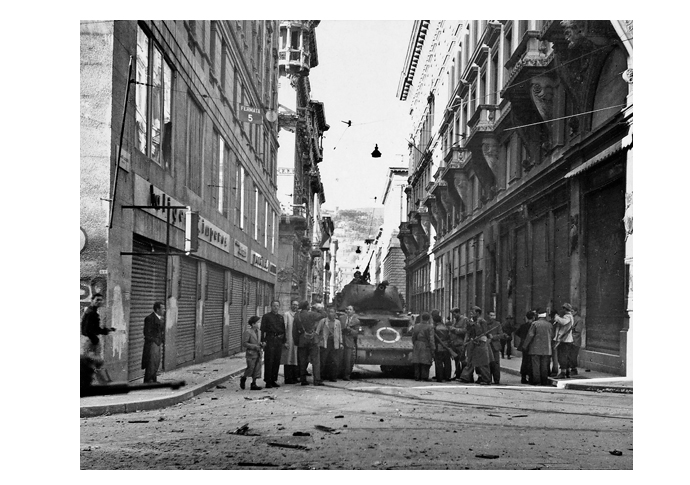
Marion Wulz, Tank Surrounded by Yugoslav Partisans, Trieste, 2 May 1945, gelatin silver print [Florence, Archivi Alinari-Archivio Studio Wulz]
THE pioneering work of sisters Wanda and Marion Wulz in the development of avant-garde photography in Italy is the focus of a fascinating exhibition at the Estorick Collection*.
Photography was with Wanda (1903-1984) and Marion (1905-1993) from childhood and in 1928 they inherited the family studio in Trieste, founded by their grandfather Giuseppe and later run by their father Carlo.
Their studio became a vibrant centre of creativity and Estorick director Dr Roberta Cremoncini notes in a show catalogue: “Commercial portraits of actors, dancers and gymnasts coexisted with something far more ambitious: a body of work through which the sisters fashioned their own image as modern, independent women, most vividly in Wanda’s collaborations with the designer Anita Pittoni and in her audacious self-portraits, which placed her among the boldest, most experimental photographers of her generation.”
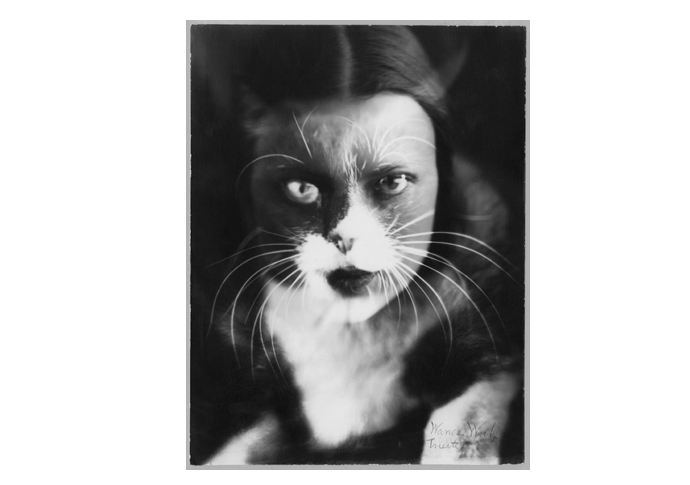
Wanda Wulz, I + Cat,1932, gelatin silver print (reprint 1982) [Florence, Archivi Alinari-Collezione Zannier]
A “decisive moment” came in 1932, the Estorick say, when Wanda presented a series of experimental works at the national exhibition of Futurist photography, including the most famous from the studio, I + Cat, merging her features with that of the animal.
A sense of the sisters as modern and emancipated women is clearly demonstrated.
And while self-portaits by Marion are not in evidence here, some of her notable wartime shots of Trieste are, including that of a tank surrounded by Yugoslav partisans, May 1945.
* Wanda and Marion Wulz, Avant-garde Photography in 20th-Century Italy, at the Estorick Collection of Modern Italian Art, Canonbury Square, N1 2AN, until December 20.
www.estorickcollection.com
